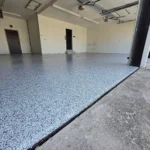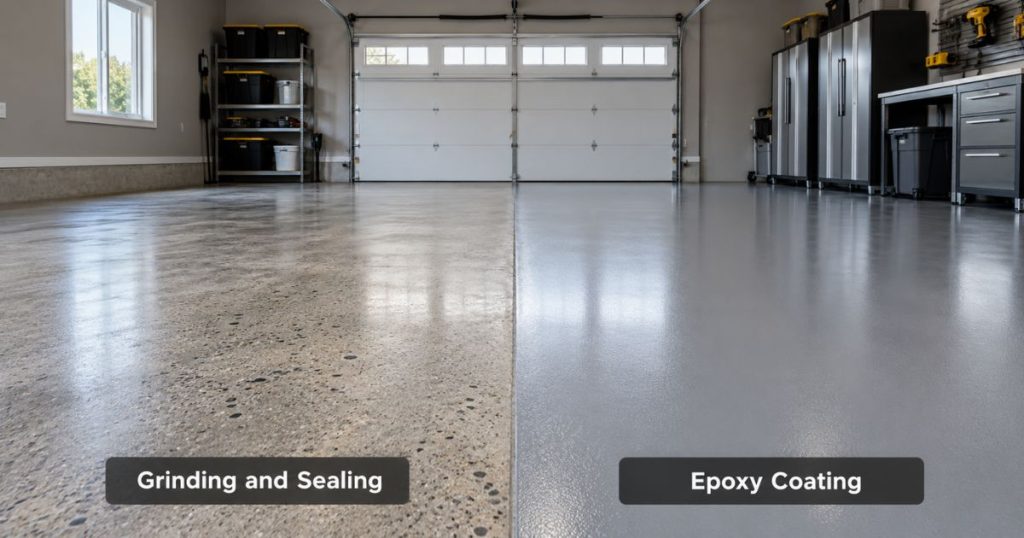
Concrete floors are used in residential garages, basements, retail spaces, warehouses, and commercial buildings throughout Wisconsin. Although concrete is a durable material, an unfinished surface can collect dust, absorb stains, and become difficult to maintain. Choosing an appropriate finish helps improve its appearance and everyday usability.
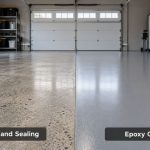
Two options worth considering are grinding and sealing versus epoxy coating. Both can protect concrete and create a more finished appearance, but they differ in design possibilities, application methods, and performance characteristics.
Understanding these differences can help property owners choose a flooring solution that suits their space, budget, and maintenance expectations.
Understanding Grinding and Sealing vs. Epoxy Coating
Before comparing these options, it is important to understand how each finishing method works. Both grinding and sealing and epoxy coating can improve a concrete floor’s appearance and protection, but they use different approaches. Understanding these differences helps property owners choose a finish that suits their needs.
What Is Grinding and Sealing?
Grinding and sealing is a concrete finishing process that uses mechanical grinding to remove surface irregularities and expose the underlying concrete or aggregate. Once the desired appearance is achieved, a protective sealer is applied.
Depending on the floor’s condition and the intended result, grinding may expose fine aggregate or create a more pronounced decorative appearance.
Sealers can include acrylic, polyurethane, or epoxy formulations. This means grinding and sealing is not necessarily an epoxy-free flooring option.
The objective is generally to retain the natural appearance of concrete while improving surface protection and cleanability.
Polzin Epoxy Designs offers professional grinding and sealing services for residential, commercial, and industrial applications in Wisconsin.
What Is an Epoxy Floor Coating?
An epoxy floor coating is a resin-based system created by combining compatible components that chemically react to form a hardened protective surface.
Unlike a grind-and-seal finish that emphasizes the concrete beneath, decorative epoxy systems can provide a more uniform appearance or incorporate pigments and decorative materials.
Depending on the selected system, an installation may include a primer, epoxy base coat, decorative broadcast, and protective topcoat.
Epoxy coatings are used where property owners want a combination of concrete protection, customization, and manageable maintenance.
Key Differences Between Grinding and Sealing and Epoxy Coating
Although both approaches can improve an existing concrete floor, their practical differences influence which may be more appropriate.
| Feature | Grinding and Sealing | Epoxy Coating System |
| Appearance | Highlights natural concrete and aggregate | Allows solid colors and decorative finishes |
| Surface preparation | Concrete is ground to the desired finish | Concrete is prepared for coating adhesion |
| Protective material | Clear or tinted sealer, depending on the system | Epoxy-based coating with optional topcoat |
| Customization | Primarily natural concrete appearance | Greater color and decorative flexibility |
| Maintenance | Routine cleaning and periodic finish assessment | Routine cleaning and coating inspection |
| Cost | Depends on grinding and sealer requirements | Depends on preparation, coating layers, and design |
| Applications | Residential and commercial interiors | Garages, commercial floors, and other suitable spaces |
Neither option is automatically superior. The right choice depends on the existing concrete, desired appearance, exposure conditions, and the materials specified for installation.
Appearance and Design Options
Appearance is often one of the first differences property owners notice when comparing grinding and sealing with epoxy coating. While grinding and sealing highlights the natural characteristics of concrete, epoxy coatings offer greater flexibility in colors and decorative finishes. The right choice depends on the desired appearance and overall design of the space.
Natural Concrete Finishes
Grinding and sealing showcases characteristics already present in the concrete slab.
Subtle color variations, exposed aggregate, and natural surface patterns can create an understated industrial or contemporary appearance. This makes the approach appealing for showrooms, offices, retail environments, and residential spaces where the concrete itself contributes to the design.
However, the final appearance depends on the original slab. Existing repairs, discoloration, or inconsistent aggregate distribution may remain visible after grinding.
Decorative Epoxy Finishes
Epoxy flooring provides additional opportunities to change the appearance of a concrete surface.
Instead of highlighting existing concrete, property owners can select colors and decorative elements that complement the surrounding environment.
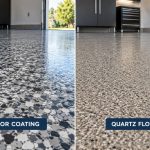
For example, the company’s flake coating systems incorporate decorative vinyl chips into compatible resin flooring systems.
These finishes can create a consistent visual appearance while offering customization for garages, commercial interiors, and other suitable applications.
For property owners who prioritize decorative flexibility, an epoxy-based system may offer more options than a natural grind-and-seal finish.
Durability and Long-Term Floor Protection
Durability is an important consideration when comparing grinding and sealing with epoxy coating. Both methods can help protect concrete surfaces, but their long-term performance depends on several factors, including concrete condition, surface preparation, product formulation, foot or vehicle traffic, and environmental exposure.
How Grinding and Sealing Protects Concrete
A grind-and-seal system protects the prepared concrete using a selected sealer.
Depending on its chemistry, the sealer can help limit staining, reduce surface dusting, and improve cleaning.
However, different sealers provide different levels of resistance to chemicals, abrasion, moisture, and sunlight. A lightly sealed residential floor should not be expected to perform identically to a heavier-duty commercial flooring system.
Maintenance requirements also vary depending on the sealer and the amount of traffic.
How Epoxy Coatings Protect Concrete
Epoxy coating systems create a protective resin layer over properly prepared concrete.
Suitable systems can provide resistance to everyday abrasion, spills, and specified chemical exposures. However, performance must be evaluated against the particular products and working conditions.
The American Concrete Institute’s guide to concrete surface preparation explains why evaluating existing concrete conditions and selecting appropriate preparation methods are important before applying protective coating systems.
Importantly, epoxy does not correct structural damage within the concrete slab. Existing movement or unresolved moisture conditions can contribute to coating failure.
A professional assessment helps establish whether a proposed system is appropriate.
Installation and Surface Preparation Requirements
Both grinding and sealing and epoxy coating require careful surface preparation to achieve a durable, consistent finish. Although their installation processes differ, proper concrete evaluation, cleaning, and preparation are essential for achieving suitable adhesion, appearance, and long-term performance.
Grinding and Sealing Installation
The process generally begins with an inspection of the existing concrete.
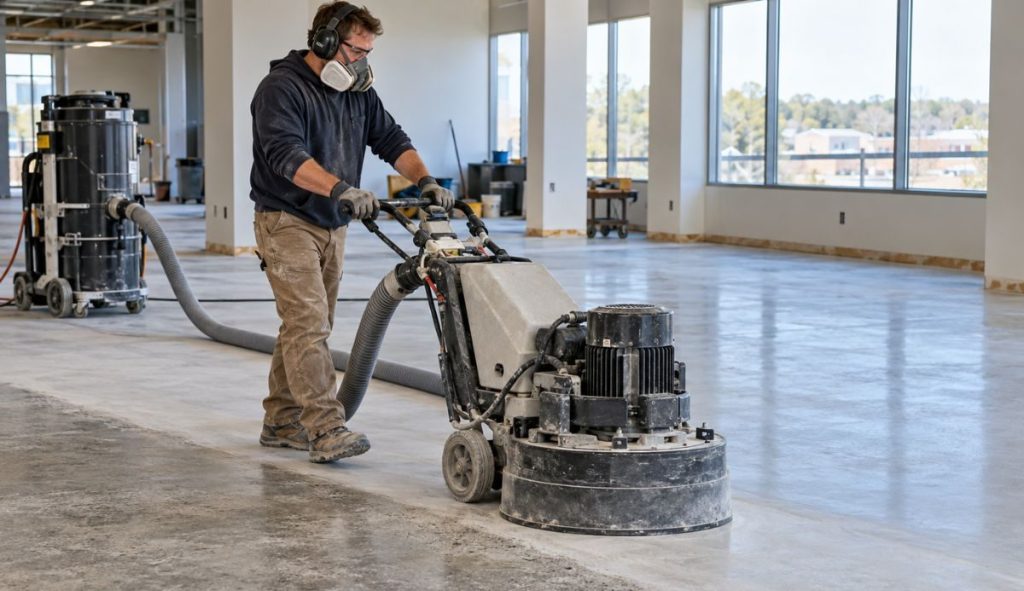
After evaluating the surface, the installer uses grinding equipment to prepare the slab and achieve the intended exposure or appearance.
The surface is then cleaned before an appropriate sealer is applied.
The number of grinding passes, necessary repairs, and sealer application requirements depend on the desired result and concrete condition.
Epoxy Coating Installation
Epoxy coating installation also begins with evaluating the substrate.
Existing contamination, unsuitable coatings, weak surface material, and moisture concerns must be considered before proceeding.
Mechanical preparation creates a surface profile compatible with the selected coating system.
The International Concrete Repair Institute’s technical article on concrete surface preparation explains how evaluating substrate conditions, selecting appropriate preparation methods, and specifying suitable concrete surface profiles contribute to successful coating applications.
Once the surface is ready, compatible coating materials are applied according to the manufacturer’s requirements.
Curing and return-to-service periods depend on the specific formulation and environmental conditions. Neither installation method should be assumed to have a universal completion timeline.
Maintenance and Cleaning Considerations
Both grinding and sealing and epoxy coating can make concrete floors easier to clean and maintain compared with unfinished surfaces. However, neither option is completely maintenance-free. Regular cleaning, appropriate cleaning products, and occasional inspections help preserve the floor’s appearance and long-term performance.
Maintaining a Grind-and-Seal Floor
Routine maintenance typically involves removing abrasive dirt and cleaning with products suitable for the installed sealer.
Owners should also monitor high-traffic areas for signs of wear.
Depending on the finish and environmental exposure, periodic resealing may be necessary.
Maintaining an Epoxy-Coated Floor
Epoxy floors generally benefit from regular sweeping, prompt spill removal, and compatible cleaning products.
Abrasive debris should not be allowed to accumulate because repeated traffic can affect the surface finish.
Harsh cleaners, dragging heavy objects, and inappropriate cleaning equipment may also damage certain coatings.
For either flooring option, following the coating manufacturer’s maintenance guidance is preferable to assuming that every sealed concrete surface requires identical care.
Cost Considerations for Wisconsin Property Owners
Cost is another important factor when comparing grinding and sealing versus epoxy coating.
However, there is no reliable universal price difference between the two approaches.
A relatively straightforward grind-and-seal project may require fewer decorative coating materials, while extensive grinding, repairs, or specialized sealers can increase its cost.
Likewise, epoxy flooring prices vary according to substrate preparation, moisture mitigation, coating specifications, decorative finishes, and project size.
Important pricing considerations include:
- Existing concrete damage and repair needs
- Surface preparation requirements
- Selected sealer or coating materials
- Decorative design and finish complexity
- Accessibility and installation conditions
- Expected traffic and maintenance requirements
Wisconsin property owners should evaluate both the installation estimate and anticipated maintenance responsibilities.
A lower initial quote does not necessarily represent better long-term value if the selected finish is poorly suited to the space.
Which Flooring Option Is Best for Different Spaces?
The intended use of the floor plays an important role in choosing between grinding and sealing and epoxy coating. Different environments have varying requirements for durability, appearance, maintenance, and protection. Understanding how each flooring option performs in residential, commercial, and industrial spaces can help property owners make an informed decision.
Residential Garages and Basements
Grinding and sealing may appeal to homeowners who prefer the natural appearance of concrete and want a relatively simple protective finish.
Epoxy coatings may be preferable when customization, decorative colors, or specific resistance properties are priorities.
For Wisconsin garages, road salt, tracked-in moisture, vehicle traffic, and seasonal temperature changes should be considered when choosing either system.
Commercial and Retail Properties
Grinding and sealing can complement commercial interiors where a natural concrete aesthetic is desired.
Decorative epoxy systems offer alternative colors, textures, and finishes for businesses seeking a particular appearance or flooring specification.
Cleaning practices, foot traffic, and the potential for wet conditions should influence the selection.
Industrial and High-Traffic Facilities
Industrial flooring decisions require closer attention to equipment loads, abrasion, chemical exposure, and operational requirements.
A suitable resin coating may provide advantages in certain demanding environments, but not every epoxy formulation is designed for industrial use.
Similarly, a grind-and-seal finish may be appropriate for some facilities but unsuitable for areas requiring specialized chemical protection.
The best option depends on a site-specific assessment rather than the flooring category alone.
Choosing the Right Concrete Floor Finish
Before committing to a flooring project, property owners should evaluate the following questions:
- Do you prefer the natural appearance of concrete or a customized decorative finish?
- What types of foot traffic, vehicles, or equipment will use the space?
- Will the floor experience frequent spills, moisture, or chemical exposure?
- What cleaning and maintenance routines are realistic?
- Does the existing concrete require repairs or moisture evaluation?
Answering these questions helps narrow the choices and establishes expectations before installation begins.
Polzin Epoxy Designs offers both grinding and sealing and decorative coating solutions. Property owners can contact Polzin Epoxy Designs for a free estimate to discuss available finishes and project requirements.
Final Thoughts
Choosing between grinding and sealing versus epoxy coating begins with understanding how the concrete floor will be used.
Grinding and sealing can preserve a natural concrete appearance while adding protection through an appropriate sealer. Epoxy coating systems provide additional decorative possibilities and performance characteristics that depend on their formulation.
Neither method is universally better for every garage, basement, showroom, or commercial property.
By considering surface condition, design preferences, maintenance, and environmental exposure, Wisconsin property owners can select a practical flooring solution that meets their needs.
Frequently Asked Questions
Is grinding and sealing cheaper than epoxy coating?
Not necessarily. Grinding and sealing may be less expensive in some applications, but extensive surface preparation and specialized sealers can affect pricing. Epoxy costs also depend on coating materials, preparation, and decorative features.
Is grinding and sealing the same as polished concrete?
No. Grinding and sealing uses a protective sealer after surface grinding. Mechanically polished concrete typically involves progressively finer grinding and polishing steps, sometimes with densification. The two finishes can look similar but use different processes.
Can epoxy be applied over an existing sealed concrete floor?
Potentially, but the existing sealer must be evaluated for compatibility and adhesion. Removal or additional preparation may be necessary before applying an epoxy system.
Which flooring option is easier to maintain?
Both can be relatively straightforward to maintain when appropriately installed. Cleaning requirements depend on the selected sealer or coating, surface texture, traffic, and exposure conditions.
Can either option be installed on older concrete?
Yes, older concrete may be suitable for either treatment if its condition supports the intended installation. Significant cracking, contamination, weak surface material, or moisture issues may require further evaluation and preparation.