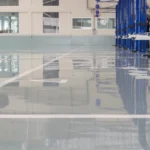
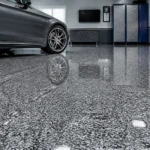
Is your garage floor slowly dissolving right under your tires? It sounds dramatic, but for homeowners in Wisconsin, it’s a cold, hard reality. We often treat our garage floors like an afterthought: a slab of gray stone meant to be driven on and ignored. But that bare concrete is far more vulnerable than it looks.
At Polzin Epoxy Designs, we’ve spent 30 years revitalizing floors across Wisconsin, and we’ve seen exactly what happens when concrete is left to fend for itself. From the corrosive bite of road salt to the silent pressure of freeze-thaw cycles, an unsealed floor is a ticking financial time bomb.
If you want to stop the erosion and elevate your home's value, you need to stop making these seven common mistakes.
1. Thinking Bare Concrete is "Fine"
The biggest mistake is the most basic one: assuming that because concrete is hard, it’s indestructible. In reality, concrete is a porous sponge. It is filled with microscopic capillaries that pull in everything they touch.
When you leave your floor unsealed, you are allowing water, oils, and chemicals to migrate deep into the slab. Once they’re in, they’re almost impossible to get out. This leads to "dusting": that annoying gray powder that settles on your cars and storage bins. That powder is actually your floor slowly disintegrating.
2. Ignoring the "Silent Killer": Wisconsin Road Salt

In Wisconsin, salt isn't just for the roads; it’s a concrete killer. When you drive your car into the garage after a snowy commute, it drips a concentrated brine onto your floor.
The Danger: Salt lowers the freezing point of water, which sounds good, but it actually increases the number of "freeze-thaw" cycles your concrete undergoes. Water enters the pores, freezes, expands by 9%, and literally blasts the concrete apart from the inside. This results in pitting, spalling, and deep craters that make your garage look like a lunar landscape.
3. Treating Cracks Like Cosmetic Issues
Do you have a few "hairline" cracks you’ve been ignoring? Those aren't just an eyesore; they are highways for moisture. Once water reaches the soil beneath your slab, it can cause the ground to shift or wash away, leading to structural sinking.
Even worse, if your slab has rebar reinforcement, salt-water intrusion will cause that steel to rust. As rust expands, it creates massive internal pressure, leading to "pop-outs" and expensive structural repairs that cost far more than a protective coating ever would.
4. Falling for the "Big Box" DIY Epoxy Kit
We get it: the $100 kit at the hardware store looks like a bargain. But there’s a reason professional coatings like our Full Flake systems last decades while DIY kits peel in six months.
DIY kits are usually water-based and very thin. They don't "bite" into the concrete. Without industrial-grade surface preparation, like diamond grinding, the coating just sits on top. The first time your tires get hot from a summer drive, they’ll literally pull the "paint" right off the floor.
5. Skipping the Moisture Test

You can't see it, but moisture is constantly moving through your concrete slab from the ground up. This is called Moisture Vapor Transmission (MVT). If you seal a floor that has high moisture levels without a proper vapor barrier, the water pressure will build up under the coating until it blisters and delaminates.
At Polzin Epoxy Designs, we test your slab's moisture levels before we even crack a bucket of resin. If there’s a moisture problem, we solve it with specialized primers so your floor stays bonded for life.
6. Neglecting to Seal Before Stains Set In
An unsealed floor is a permanent record of every oil change, coolant leak, and spilled paint can. Because concrete is porous, these fluids soak in deep. By the time you decide to "finally do something about the floor," the concrete may be so contaminated with oil that a coating won't stick without extensive (and expensive) chemical degreasing.
Sealing your floor now creates a non-porous shield. Instead of a permanent stain, an oil spill becomes a 30-second cleanup with a paper towel.
7. Choosing the Wrong Coating System
Not all coatings are created equal. Many people think "epoxy" is the only option, but in a garage environment, a standard epoxy topcoat can be a mistake.
- The Problem with Epoxy Topcoats: Standard epoxy is rigid and can go yellow (amber) when exposed to the UV rays coming through your open garage door.
- The Polzin Solution: We recommend a Polyaspartic topcoat. It’s UV-stable, meaning it stays crystal clear forever, and it’s flexible enough to handle the expansion and contraction of Wisconsin’s extreme temperature swings.
How to Fix It: The Polzin "Triple-Threat" System

You don't just need a "coat of paint"; you need a system engineered for the Fox Valley climate. We’ve perfected a three-layer approach that revitalizes your space and shields your concrete forever:
- The Industrial Prep: We don't just wash the floor. We use diamond grinders to open the concrete's pores, ensuring the coating becomes a permanent part of the slab.
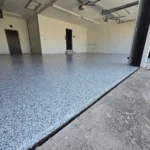
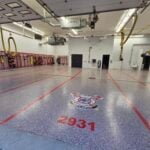
- The Basecoat & Flake: We apply a high-solids epoxy or polyurea basecoat followed by a "full broadcast" of decorative vinyl flakes. This adds incredible impact resistance and hides any existing imperfections in the concrete.
- The Polyaspartic Topcoat with Anti-Slip: Finally, we seal everything with a polyaspartic topcoat. We include a specialized anti-slip additive, so your floor is safe to walk on even when you're tracking in melting snow and rain.
Why Act Now?
The longer you wait, the more "cancerous" the salt damage becomes. What is a simple coating project today could become a full concrete replacement project in three years.
Transform your garage from a dusty, crumbling utility room into a clean, bright, and durable extension of your home. Whether you're looking for a flake coating for your garage or a custom metallic finish for a basement, we have the 30 years of expertise to get it done right the first time.
Stop the erosion and start the transformation.
Contact Drayton and the team at Polzin Epoxy Designs today for a free estimate!